What is Behind the Fear of Not Having Enough Notebooks?
"...making sure I have enough books/notebooks/movies/podcasts/playlists/drawing supplies/internet access when I travel is less of a weird quirk as simply a coping mechanism, the same as packing enough clothing to stay warm or cool enough, depending on the weather."
Is there a darker side to the analog PKM trend?
One of the common critiques of the burgeoning “back to analog” trend is that it simply disguises another capitalism-fueled consumption binge.
I can’t argue with that; in fact, it gives me a sort of hipster status: I was spontaneously buying lots of notebooks before it was cool…
But as I was packing recently for a week-long trip to L.A., trying to make sure I had everything I would need, I looked at the notebooks I was bringing with me.
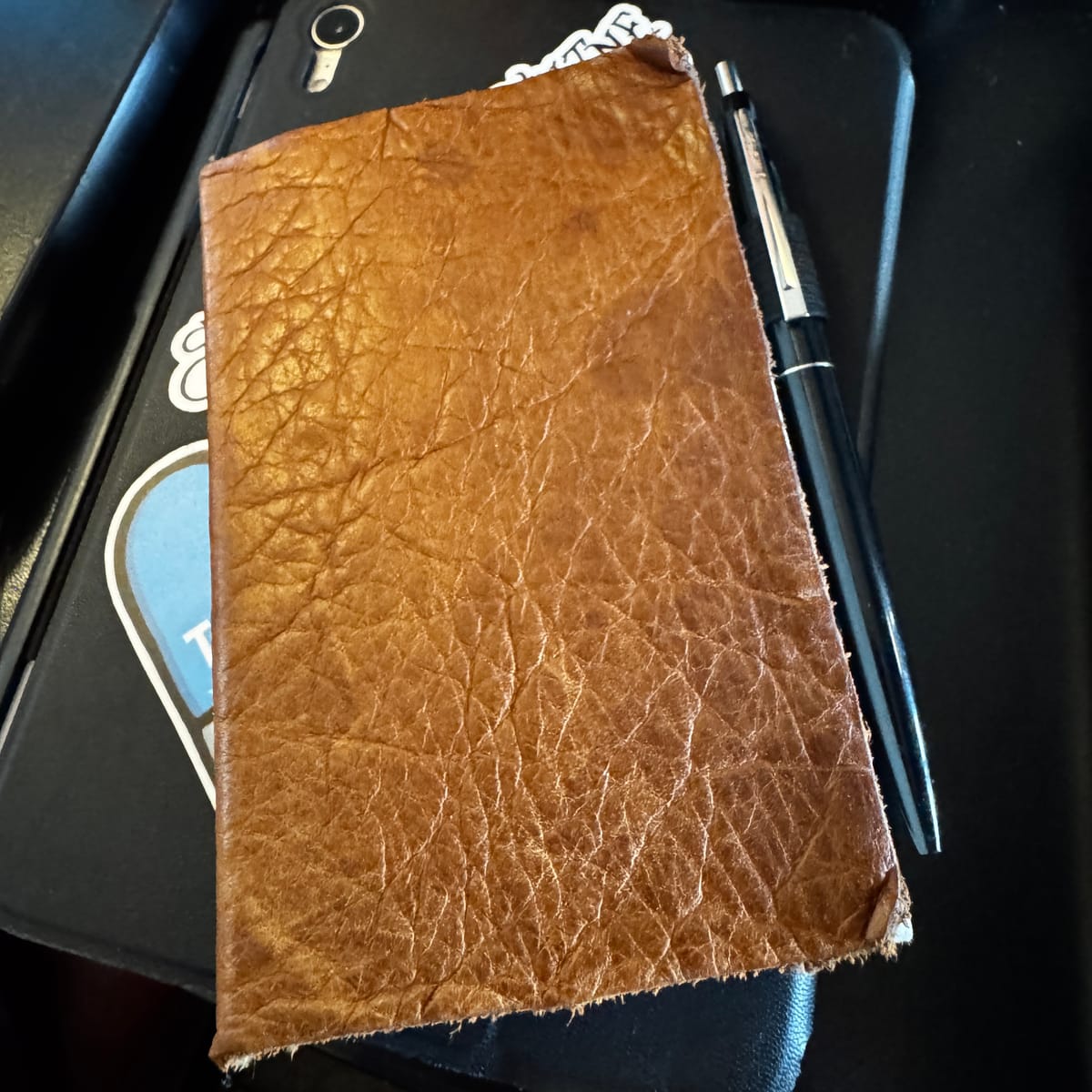
- My product-reviewing Zen Scribbles pocket notebook
- My recently-repaired Archer & Olive A5 thick notebook (easily the most expensive notebook I own).
- My Caslon XL multimedia notebook, which was my everyday notebook until I repaired the A&O mentioned above…
- My Star Trek themed Leuchturm A5, which is used (now) exclusively for my ADHD coaching certification class work.
- A 9x12 pad of brown newsprint paper I use for drafts of zines and my intermittent sketching
- Another pad of 9x12 paper, this time in the pure white often used by manga artists, which I use to create the final form of my hand-lettered zines.
And all of this was not including the several tiny ‘zines I carry in my pocket, such as my Codex, my ADHD Self-Care Bingo card, and a couple more.
 Gray Miller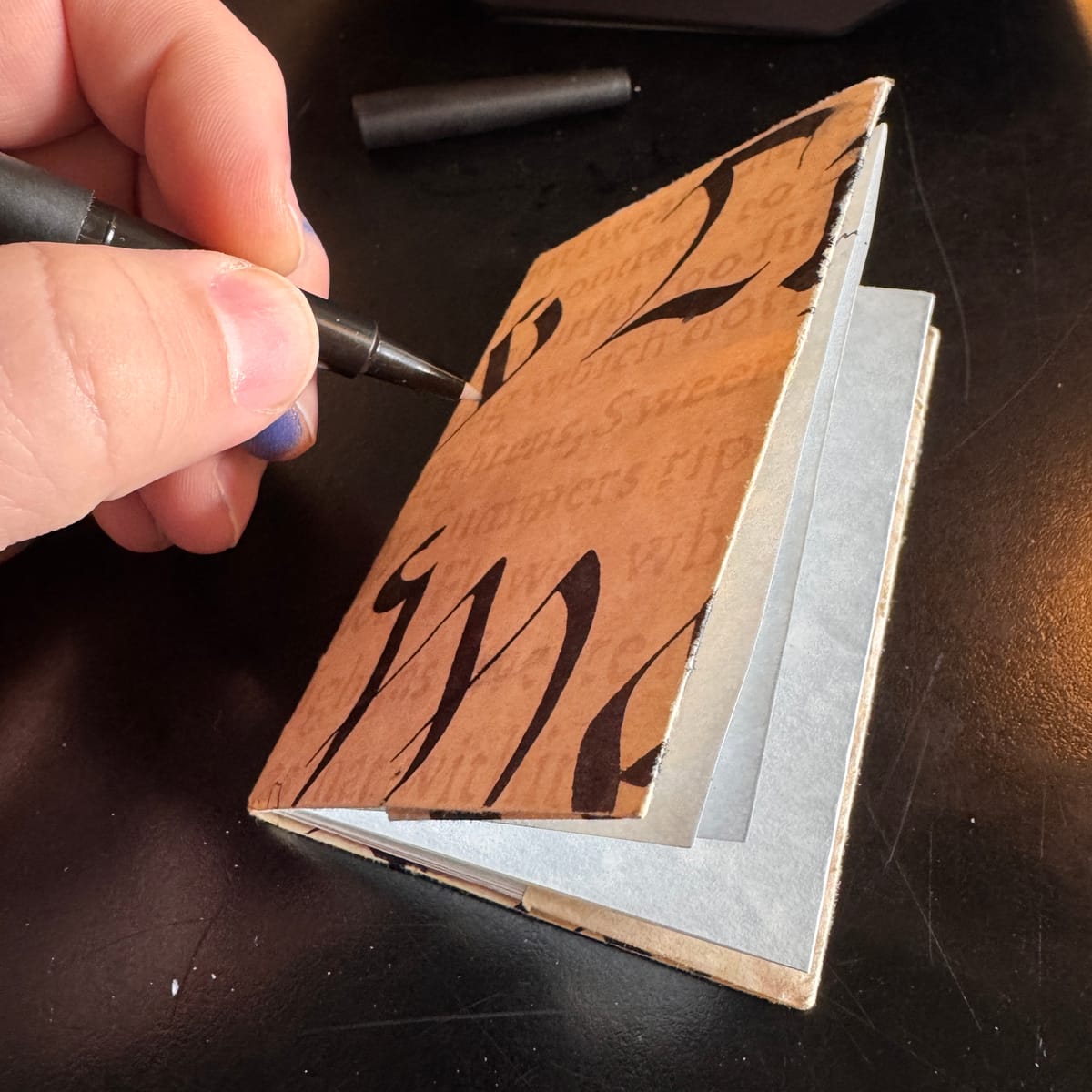
My most popular article on Medium EVER.
 Gray Miller
One of many relevant articles on the sister site...
A rational part of my brain said “this is too many notebooks to take on what is at least partially supposed to be a vacation.”
But every time I tried to take one out of my bag to go back on the shelf — I felt a frisson of anxiety. But what if I need it? was the basic fear…but it goes deeper than that, because this has been a lifelong problem.
It might be the fear of boredom.
Which is an easy thing to say and pretend that we all agree on what that word means.
But do we, really?
There’s a fun dichotomy if you happen to exist in both the ADHD community and the Creative arts. On the one hand, you have both research and lived experience that shows that neurodivergent brains (especially “AuDHD” ones) react to boredom as a pain stimulus. I particularly enjoyed this article by @indianapolism, aptly named
When I’m bored, my head aches like it is sounding the warning of what is to come. It is as if I can feel the neurons in my brain stretch to the point of aching to reach slightest bit of dopamine. Neurons seeking in vain to connect to a receptor of some serotonin to feel a sense of calm. I feel my insides vibrating, barely contained in my flesh. My skin itches as if I can wiggle out of this hard shell of a body like a lobster lest I suffocate.
I can go back in journals written long before I ever even knew about ADHD where I wrote about exactly that kind of feeling — “the absolute urgent need and knowledge that there is something I need to be doing, but absolutely no clue what it is.”
Fun times, eh? So the idea of making sure I have enough books/notebooks/movies/podcasts/playlists/drawing supplies/internet access when I travel is less of a weird quirk as simply a coping mechanism, the same as packing enough clothing to stay warm or cool enough, depending on the weather.
It’s also a kind of hoarding — not of notebooks, but of ideas.
A big reason I have used so many notebooks (and apps) is because even before understanding the ADHD-ness of my brain, I knew that I had a tendency to forget things. Simple things, like locking the back door or turning off the basement light, or big things like meetings at work or picking up my daughter from the mall. I externalized my working memory by starting to carry around a notebook and using various systems like GTD or bullet journal to try and bring some order to the chaos* of my life and brain.
But more than that, I wanted to have a place to capture the ideas that came to me, because I was working with the shotgun strategy of success: If I try a wide spread of things with just a little bit of effort, surely something will hit!
The fear — the insecurity — was that I was going to have an idea (or, to use the Elizabeth Gilbert model, an idea would come to visit) and I would not write it down — and knowing how forgetful my brain is, I would lose it.
Surely if it is important, you will remember it seems like a logical response — and it is, as far as I know, for those who are closer to the neurotypical end of the spectrum. The reality of my brain is that I forget ideas that I actually carried successfully to fruition.
Yeah, that’s right. I’ve had people mention articles, talks, videos, performances that I have done, that I don’t even remember any more. So telling me that I should have faith that my brain will remember something all by itself is like telling my partner not to bother checking if I remembered to lock the back door. Even if I do remember 95% of the time, that 5% comes up at the most inconvenient times — so I’m glad she checks.
I need notebooks to combat the fear of missing my One Great Idea
You know — the One Thing that Thiel wrote about, or that Jack Palance talked about in City Slickers. The Thing you are Called to Do, that Only You can do. That advice that Martha Graham famously gave to Agnes DeMille:
…this expression is unique. And if you block it, it will never exist through any other medium and (will) be lost. The world will not have it.
Great. No pressure.
A brain that is fantastic at coming up with ideas but lousy at remembering them long enough to follow through is about as useful as a car with a Lamborghini engine and bicycle brakes.
Oh…wait.**
So I have a codex in my pocket (with a pen and a pencil), and a tiny Zen Scribbles notebook in my outside bag pocket, and my Archer and Olive A5 notebook on the inside. I have Obsidian and Notion and Apple Notes and…
…and much like a hoarder who keeps everything on the off chance they might need it but can rarely find it when they do, I still lose ideas. Outlines. Entire works of art.
Perhaps the solution is in the advice of both Gilbert and Graham
One thing I do believe is that ideas are like works of art — anyone can create one, or a dozen, but that doesn’t mean any are good. Or that this is the right time for them.
Elizabeth Gilbert, in her book Big Magic, suggests that it’s even possible that you are not the right person for a particular idea — but that’s ok, it won’t be lost, it will simply go on to find another more suitable partner.
Kind of like dating.
And meanwhile, much like the whole ”jack of all trades, master of none” ** * quote, people love to quote Martha Graham but stop before what I consider is the most important part:
“It is not your business to determine how good [your art] is; nor how valuable it is; nor how it compares with other expressions. It is your business to keep it yours… to keep the channel open. You do not even have to believe in yourself and your work. You have to keep open…
And she agrees: that’s a pretty crappy deal.
No artist is pleased. There is no satisfaction whatever at any time. There is only a queer, divine dissatisfaction, a blessed unrest that keeps us marching and makes us more alive than the others.
“Queer, divine dissatisfaction…” Now, that’s a phrase that resonates with my lived ADHD experience, echoing back to that journal entry I talked about above.
The problem isn’t the notebooks. It’s the reason you carry them.
When you take the rest of Martha Graham’s quote to heart, it answers most of the fears that paralyze creatives:
What if I do it wrong? You might. That’s not your job to decide how “valuable” or how it “compares”. Just do the thing.
So many ideas! What if I choose the wrong one? You might. That’s ok. The other ideas will find someone else to do them. It’s not your job to decide if it’s the right or the wrong one. It’s your job to do the thing.
If my stack of notebooks was nothing but ideas — no reflection, no maps of thinking, no research, just a list of things to start — well, to be honest, that would be fine, as long as that was my goal. Grandpa Gray’s Big Book of Ideas has a kind of panache, I think.
But sometimes I think we ADHD folks are buying and making and carrying notebooks because we’re trying to make up for something we fear we lack, or as a leaky torn net for things we’re afraid to lose. The notebook becomes less a tool and more a security blanket.
Nothing wrong with blankets. But you might not want to carry one around everywhere.
What’s your notebook for? More importantly, perhaps…what could it be for?
If you’d like to explore more about what notebooks and other paper-based tools can do, you might enjoy visiting Papermancy.art
* I’ve come to realize that the idea of some new app or system bringing order to your life is kind of like buying new storage containers for all the stuff in your garage. The problem may not be where the clutter is kept, it may be the amount of clutter in your garage, or life, that needs to be addressed. That is a topic for another article.
** That’s an inside joke for ADHDers, because our beloved researcher Dr. Ned Hallowell coined exactly that phrase to describe his findings.
*** Usually this is quoted to express that a jack of all trades is less valuable than a specialist. But the full quote — “"Jack of all trades, master of none, though oftentimes better than master of one" — has no established source, the “JoAT” moniker was most famously used by 16th century critic Robert Greene to denigrate that hack playwright, William Shakespeare.