
Creating a place for ideas to live until you’re ready for them.
I never run out of ideas.
For those scholars of antiquity, I would be Πολύμητις γκρι , Polymetis Gray, the Gray of many methods. But like the other guy who had that epithet, Odysseus, it often feels more a curse than a gift. Sure, I can come up with a dozen different solutions or approaches to a challenge…but often that challenge only exists because of a previous idea that had seemed good at the time. Hey, look at that big rock next to that maelstrom! Let’s go check it out!
That’s the thing — being good at generating ideas doesn’t necessarily come with the skill of being able to tell the good from the bad. Or the ones you really like from the ones you’ve been socially conditioned to like.
In Big Magic Elizabeth Gilbert expands on ideas as actual beings — memes, to use a convenient term — that find and latch on to you, staying at the top of your mind or nagging in the background until you either do something about them or they give up and find someone else to bother.
Whether they are independent beings or just firing neurons in my brain, that’s where the curse of too many ideas really impacts my life. My brain will not shut up about “what about this? Did you think of that? Maybe you’re doing it wrong; maybe you should pivot to this other thing instead. Or this one. Or this one. Or that one. Or maybe you need to create a rubric to evaluate prototypes that you could field-test and… “
That’s what my brain sounds like any time I am “resting”. It’s why if I wake up early, I can’t just lay there and enjoy the soft lassitudinous feeling of slowly waking up. It’s why for years the idea of sensory deprivation tanks terrified me — why I had to aggressively study meditation techniques just to learn how to
slow
my
mind
down.
The Trap of the Intermittent Good Idea
If these were inconsequential ideas, I think I’d be fine. Deciding what sweater to wear on a winter’s day? Very low consequence if I get it wrong.
But my ideas tend to be the existential, almost cliché mid-life crisis type (that I’ve been having since my early 20’s. Am I doing what I should be? What I was meant to be doing? Am I a good person/father/partner/grandfather/friend/writer/employee? Could I be doing something better? Is that too much to expect? What would I accept being worse at if it is too much? Should I accept that my body is getting old? Or would a better system of exercise and diet really make a difference? Am I too obsessed with my looks? Or too obsessed with chocolate?
And to make it worse…while some, even most, of my ideas have been bad or even disastrous, some have been reallygood — life-altering, this-was-a-peak-experience-paying-dividends-for-years kind of good.
Remember what I said earlier: having ideas doesn’t mean I have the ability to tell which is which.
As I’ve gotten older and more tired, I’ve learned somewhat to manage the flow, to accept that I will not be able to do some things, that others might be fun but need to be deferred, for better or worse, because of present circumstances.
Somewhat. That’s the problem with being one of those “gifted and talented” kids with “unlimited potential” that somehow I never seemed to live up to. To quote Barbara Sher, “I could be anything if I only knew what it was.”
So it’s hard to dismiss ideas. It’s hard to not feel them as pressure to do something about them. I can write them down, but then that’s just another task: review your idea list. Let them go? Sure, that’s possible — but what if I let go of the wrong one?
I needed a way to keep ideas in a state where they could exist, maybe even slowly grow, but that would let me visit them on my own schedule, not theirs.
Introducing the “Idearium”
This idea came to me while I was thinking about the mental model of the “memory palace” — an idea that never really worked for me, since both “memory” and “palace” are not concepts I’m terribly familiar with*.
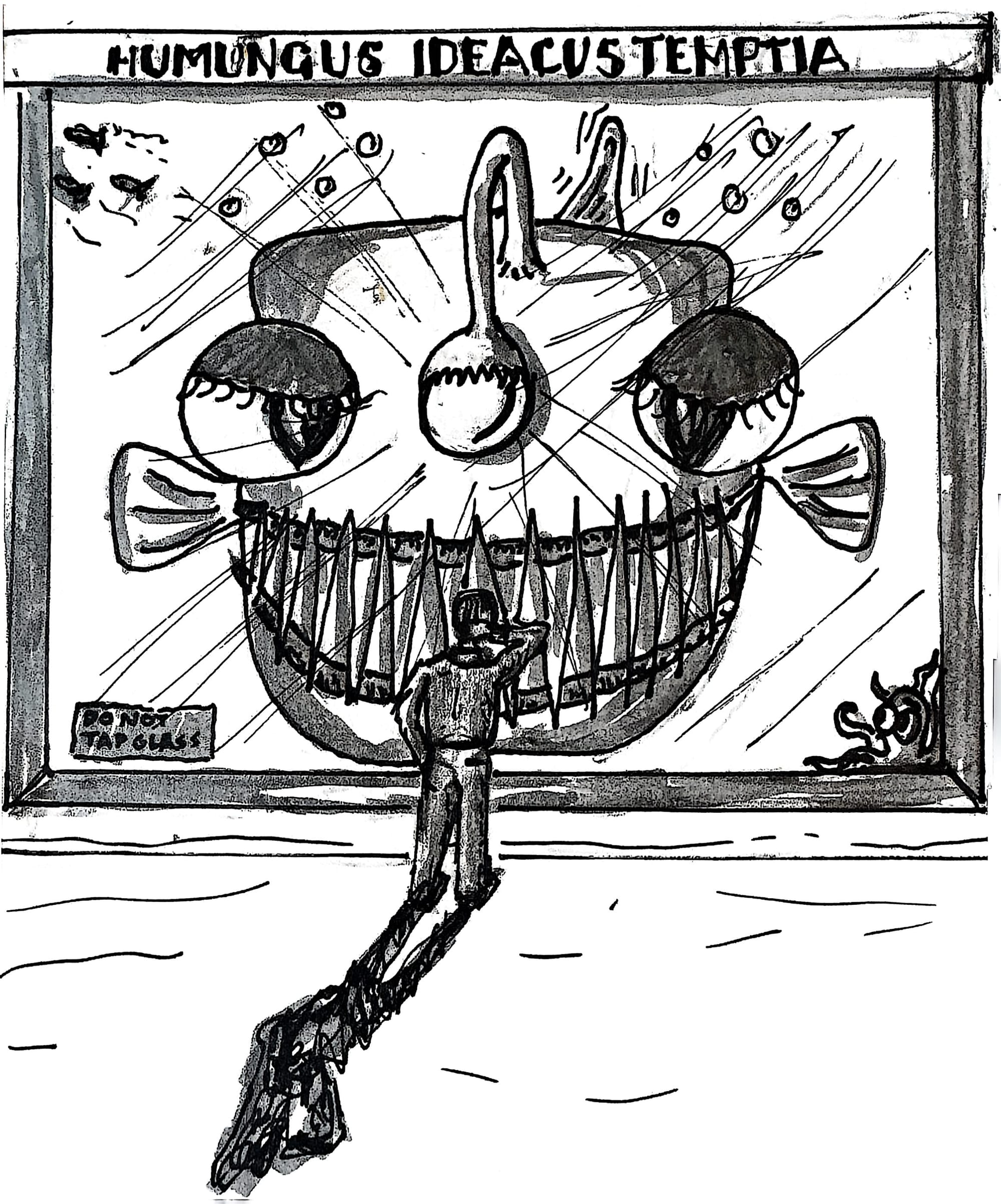
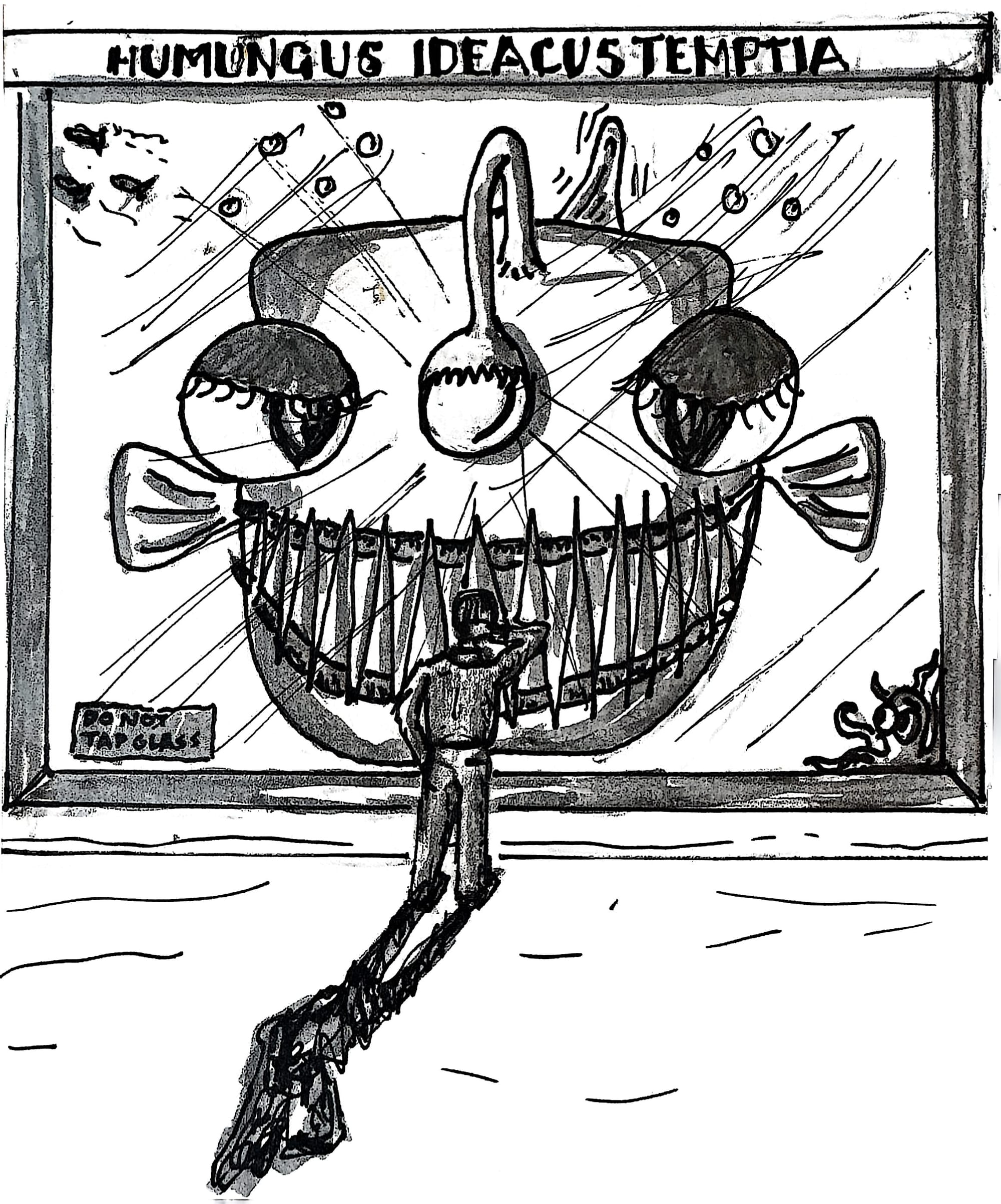
But if we’re looking for architectural metaphors for mental concepts, may I propose the model of the aquarium. This appeals to me for many reasons, as I imagined what an ideal aquarium would be like:
- You tend to feel safe in an aquarium. You can look at the shark, the shark can look at you, but nobody’s getting eaten.
- It’s not only a separated environment, it’s a controlled one. You are in a comfortable place, and so are the fishies — even though those two environments are completely different.
- Aquariums aren’t intended to be productive. They aren’t producing fish sticks or sharkskin purses (hopefully). Their value lies in their existence, rather than what they produce (just like you whispers that voice none of us listen to enough).
- They do have a purpose, though — which is first to maintain an environment for the fishes, often in miniature habitats where they interact. And the second purpose is to create a place where you can look, marvel, and maybe even understand a bit better as you visit.
What if instead of a “palace” to keep static information, we created a haven for our ideas, a place to put the ones that can’t be acted on now but still feel like they should exist? A place in our mind where we knew they would be safe, but that we could choose to visit when we felt like it, to idly wander, explore, and spend as much or as little time as we would like.
Not a memory palace. An Idearium, which I acknowledge is an entirely made up word (just like all words whispers that voice again).
The Idearium has one big advantage over aquariums
The benefit of this model structure in your mind is that unlike fishes, ideas are portable. You are absolutely allowed to pick out one or a dozen and take them out into your world with you. You can experiment with them, play with them, put them in various places in your life to see how they fit.
And when the time feels right, you can bring them back safe and sound to their part of the Idearium. Maybe they need a larger space now, or a smaller one, or you think they might get on well with some other idea. You are the one who built the Idearium, and so you know where they will be the next time you visit
Or maybe you take them out into the world because it’s time to set them free. You had fun seeing them, learning about them, spending time with them…but now it’s time to reclaim your own time and make space in the Idearium for the next idea.
This is not an excuse to buy another notebook
Because you never need an excuse, obviously.
 Gray Miller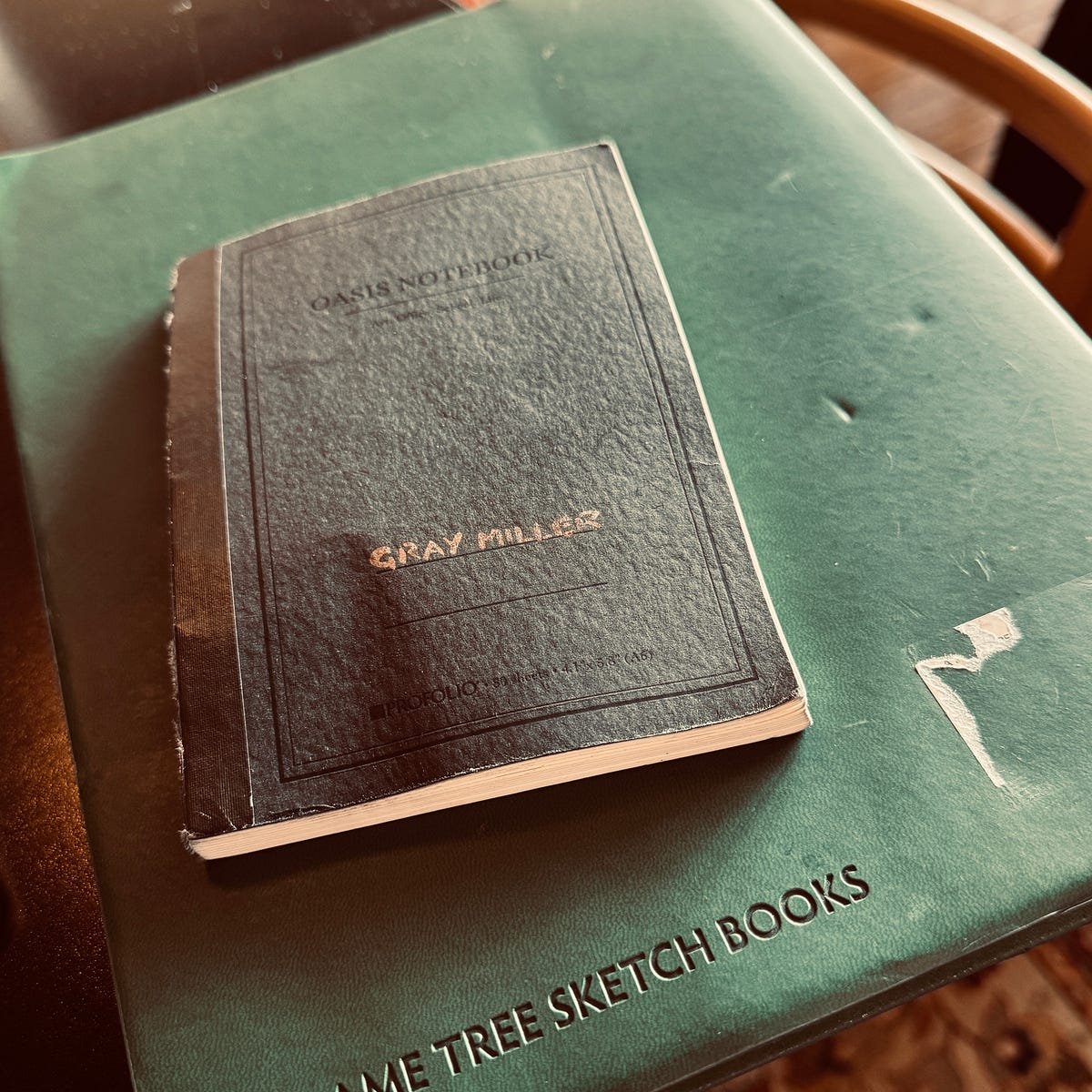
I’m not saying not to buy a notebook particularly for your Idearium. In fact, I think that would be a great exercise for your ideas: if your idea was a fish, what would it look like? What kind of habitat would it live in? What do you need to grow?
But to my mind, that’s not the Idearium, any more than a sketchbook you bring to the Shedd to draw pretty anemones is the actual aquarium.
Remember how I started this article? Talking about ideas keeping me up at night, crowding my brain, especially when I didn’t have time to act on them?
The reason the Idearium is a mental model is for those times. In the weeks since I thought of and started creating my own, I’ve found it really helps to be able to take those ideas, put them behind thick metaphorical glass, and have some distance to consider them, admire them…and walk away from them.
Maybe it’s just me. As I mentioned, I talked about this idea with my writing group and some thought it was “just another memory palace.”
I don’t think so, though, any more than the Museum of Natural History is the same as the Shedd Aquarium. One is to appreciate and remember things that happened, things that were; the other is to do the same for things that are and things that are going to be.
I know which I prefer. What about you?
* In fact, an earlier draft of this article included a long takedown of the whole concept of memory palaces, as I’d never met someone who had actually used one successfully. However, in talking about the article with my local Shut Up and Write group, I met two people who did. Which reminds us of two lessons: one, our personal experiences should not be construed to be universal, and two, writing groups are really helpful.